

Applications
One system, four scales
From homes to industry, farms to public buildings: the four lines we build are the same everywhere. What changes is which one leads, and at what scale.
Where we build
Four settings, four priorities
Every setting has its own consumption curve and its own constraint, and the system design follows from that.
Homes & private
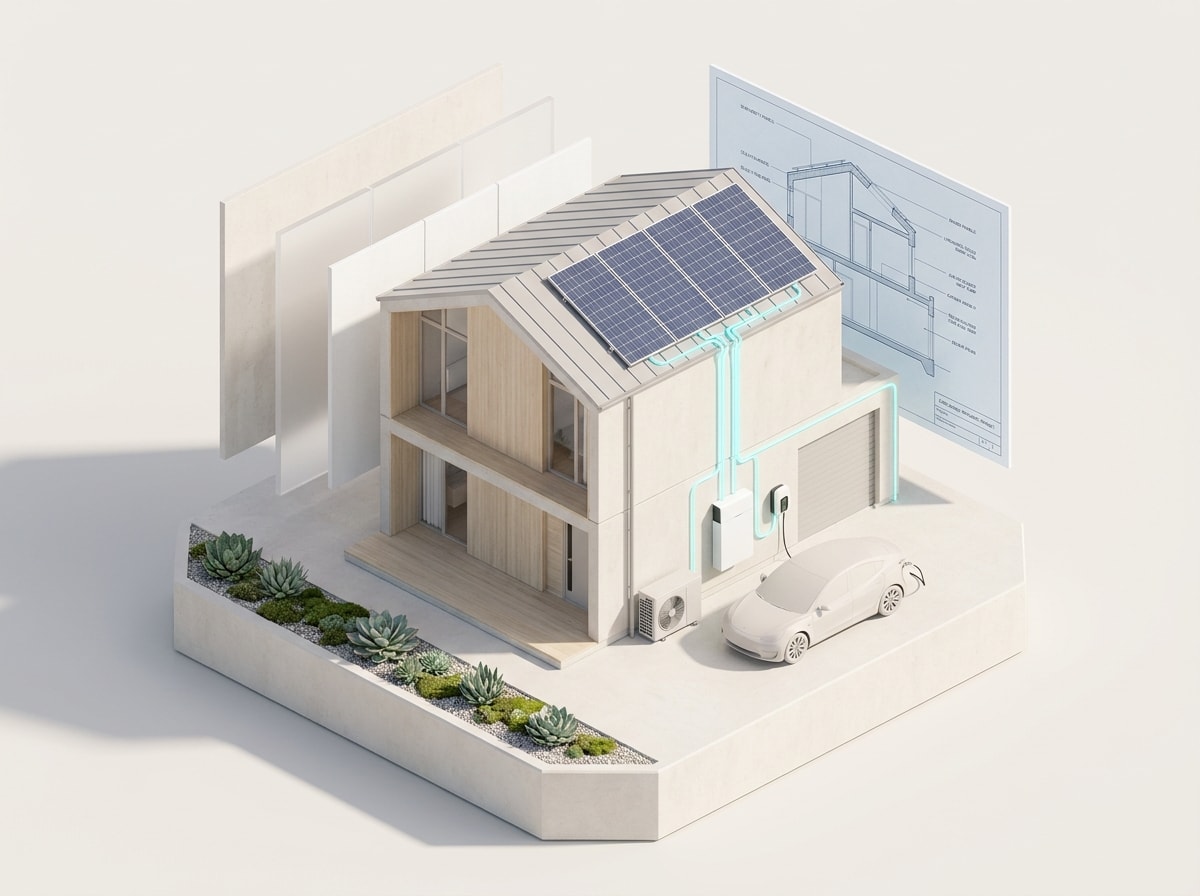
In villas, detached houses and gated communities the rooftop array, battery, heat pump and charger come together as one system.
- Energy made in the day is carried into the evening, so less is drawn from the grid.
- During an outage the house switches to the battery on its own.
- The car charges overnight on energy the roof made that day.
Lines involved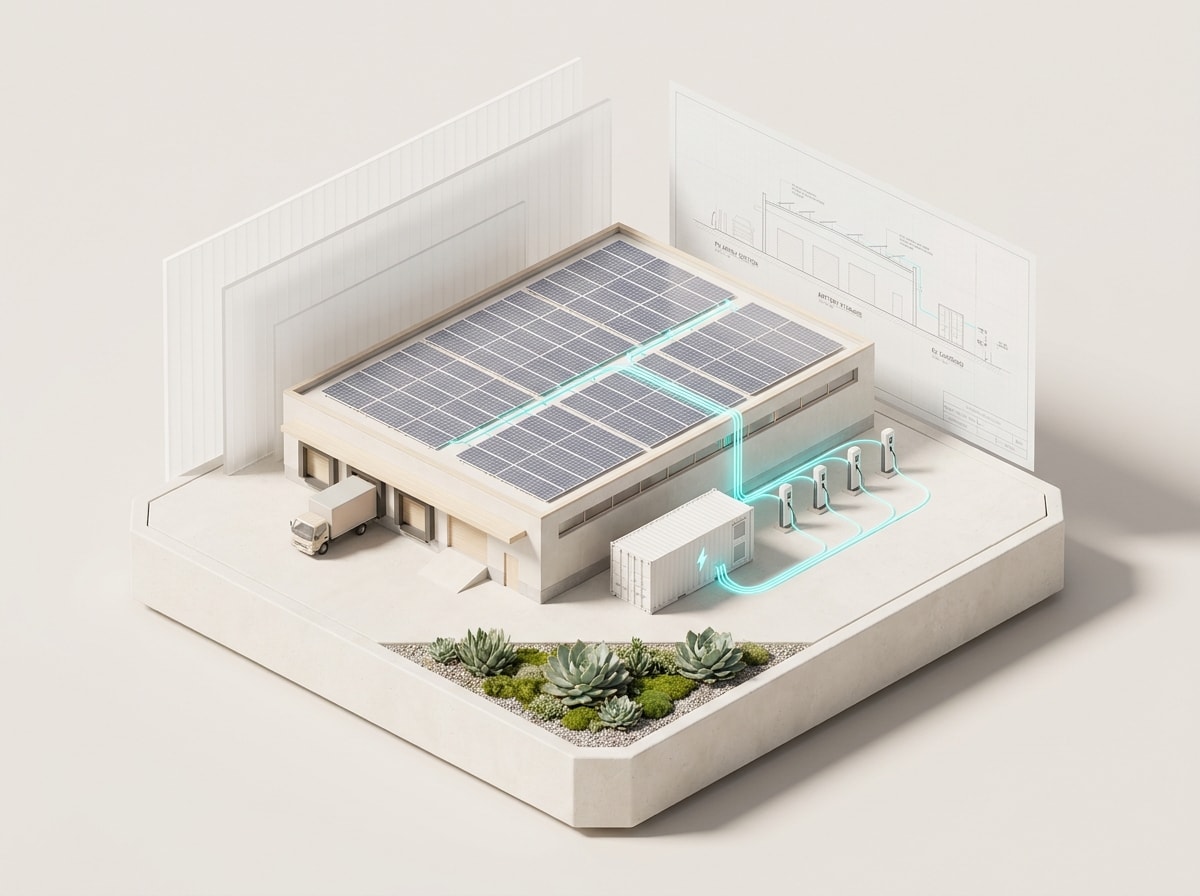
Commercial & industrial
In factories, warehouses, industrial estates and hotels, large roofs and land become high-capacity plants.
- Production runs by day, so the consumption curve lines up with the sun.
- The battery steps in at peak hours, cutting demand charges and peak penalties.
- Charging for fleets and customers runs off the same system.
Lines involved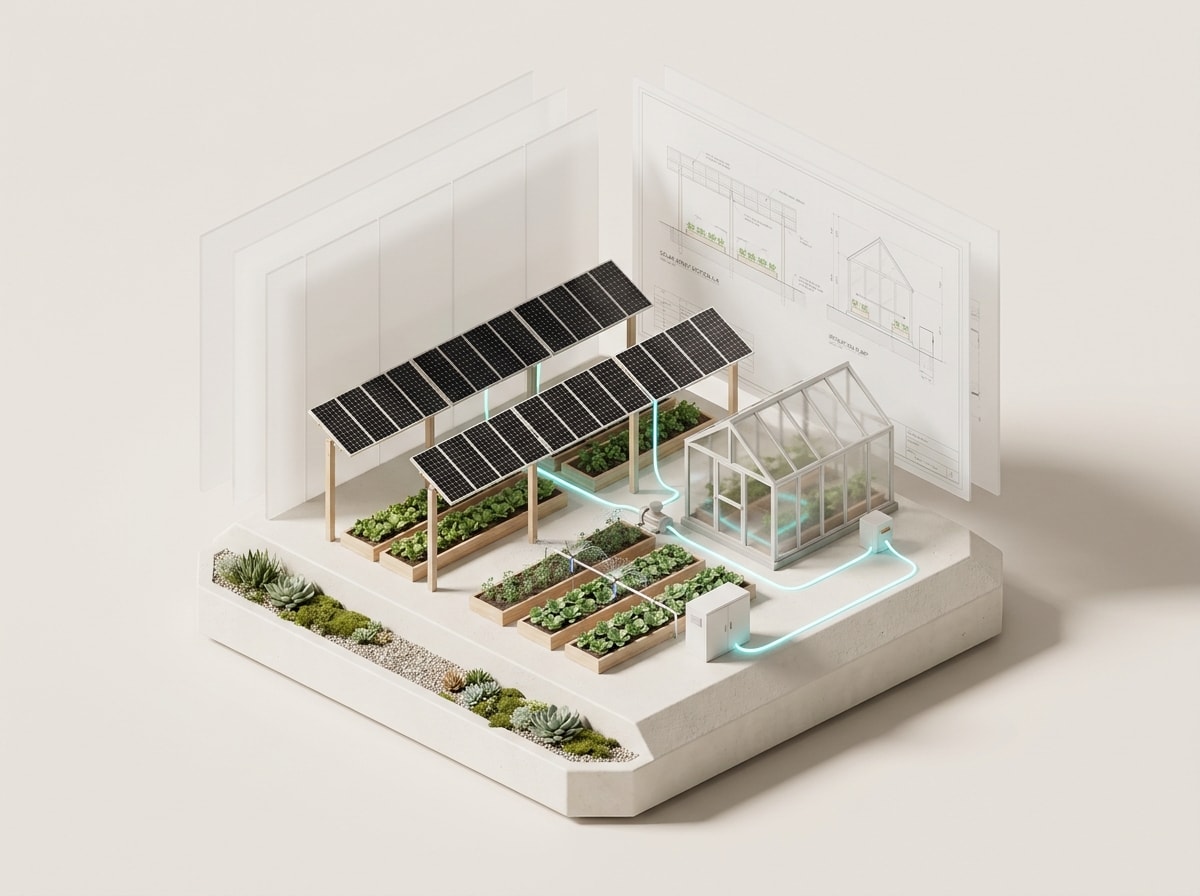
Agricultural sites
For irrigation, greenhouses, cold storage and livestock operations, energy stops being the largest line on the books.
- Irrigation pumps run in the hours the sun is strongest.
- With agri-PV the same land both generates and farms.
- Cold storage keeps running off the battery through an outage.
Lines involved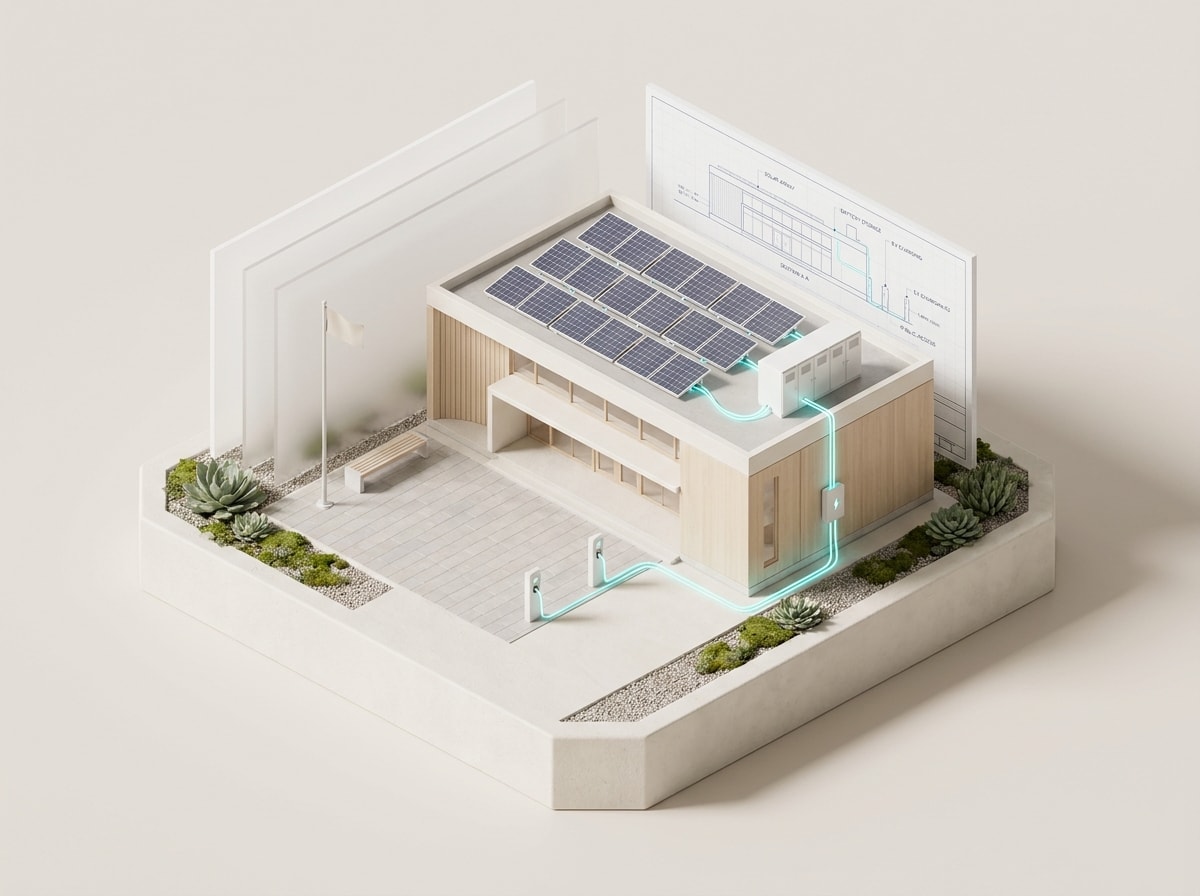
Public & institutional
For municipalities, schools, hospitals and public buildings the energy budget becomes predictable and critical loads are protected.
- The institution gets a predictable energy cost spread across years.
- Critical loads keep drawing from the battery the moment supply fails.
- Public charging points run on the institution's own generation.
Lines involved
Which one is yours?
Let us look at your roof, your land or your site in person and work out together which line leads for your consumption profile. The survey is free.
Ready?
Let's plan the energy transformation that starts on your roof
From solar and storage to EV charging and climate control, let's design the right system for your needs.